-
- 16 x
-
https://torno.lv/xirgJ5J
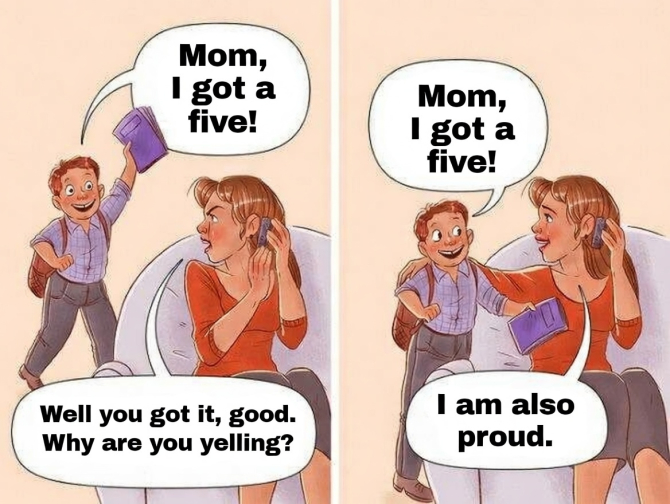
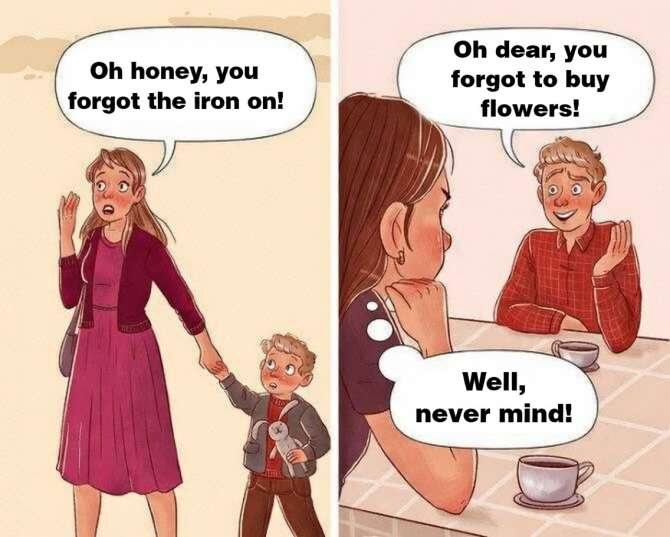
Self-esteem formed in childhood affects the rest of life. Even a very talented person may not achieve success if they lack self-confidence, while a person with average abilities, confident in their worth, can achieve a lot. And although parents cannot "give" a child self-respect, they can help the child independently gain "wings".
We decided to figure out what parental behavior undermines children`s self-respect. Observe yourself and your partner from the side, or better yet, record on a dictaphone: maybe you, without noticing, do something from the list below.
Continuation of the article
1. Making hasty conclusions
Healthy self-esteem in a child is more than just success in a peer group or with the opposite sex. It is the foundation of a child`s happiness. Psychologist Nathaniel Branden in his book ”The Six Pillars of Self-Esteem” writes that self-esteem generates both good and bad – self-fulfilling prophecies.
A person with low self-esteem more often enters romantic relationships with unsuitable partners and even ruins happy relationships with their insecurity and doubts. Positive self-esteem, on the contrary, helps them treat themselves and their chosen one with respect and makes them more resilient to difficulties.
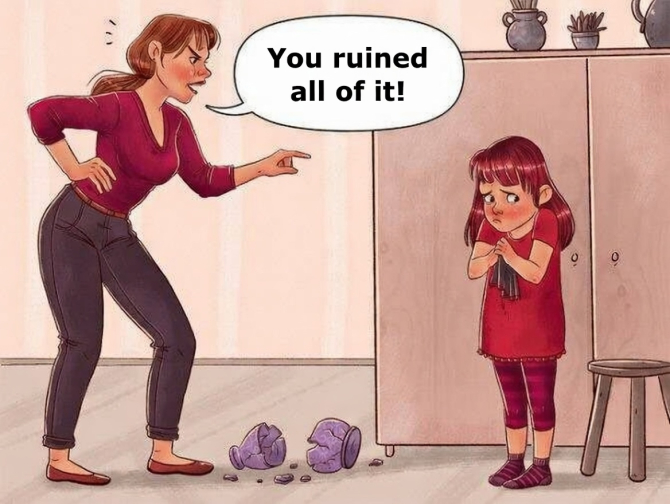
If you (accidentally or not) say to the child: ”You`ll break everything”, ”With your behavior, you`ll drive grandma to the grave”, the child will grow up with a sense of guilt. Even such innocent phrases as ”Anna is too slow”, you can influence the child`s perception, preventing them from becoming better.
2. Comparing: ”At your age I...”
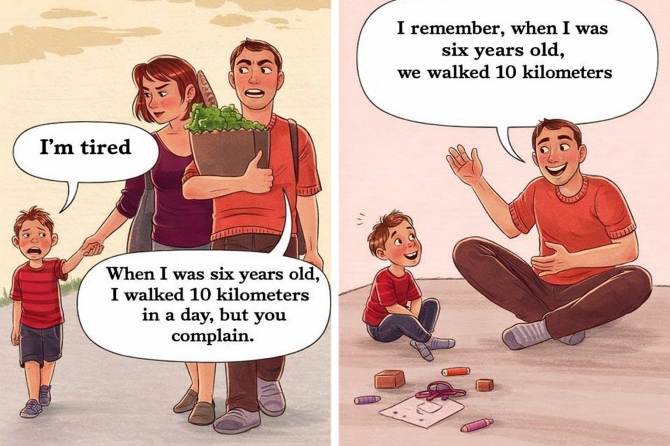
Some things we did in childhood may be uninteresting to modern children. Therefore, comparison can only cause resentment or irritation.
If you want to give an instructive example, tell a story. Believe me, the child will gladly listen to how you walked 10 km a day at 8 years old or fended off a huge dog. You can only compare the child to themselves. Then they will have an incentive to develop and become better.
3. Forbidding the expression of negative emotions
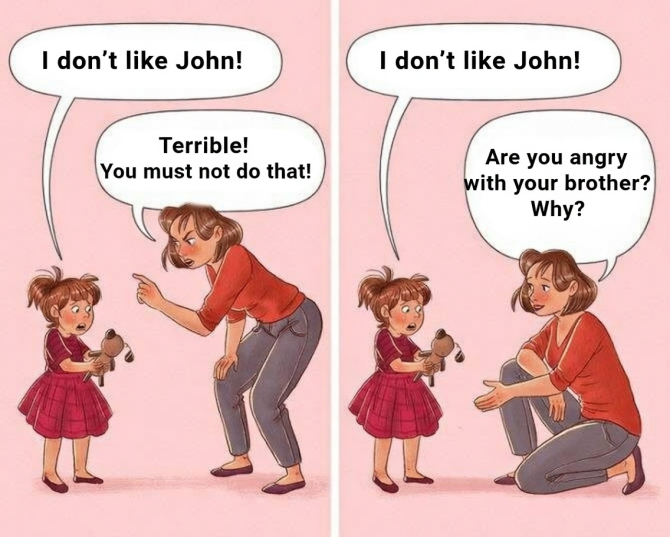
Emotions need to be expressed even if they are negative. If a child is ashamed of their feelings, it will lead to alienation and insecurity. Instead of condemning the child for their feelings, offer to share them and find an explanation. Take a few deep breaths together. This way, you will teach your son or daughter to cope with feelings, not to be ashamed.
4. Flattering your child and exaggerating their abilities
By assuring your son or daughter that they are more talented than they really are, you won`t make them more self-confident. Self-esteem should be built in direct connection with reality. It`s better to tell about their talents clearly but gently. For example: ”You don`t play the piano well enough yet to enter the conservatory, you need to prepare, and then everything will work out.” After all, the child will eventually face harsh reality.
All compliments should be sincere and, if possible, specific. The phrase ”You successfully chose the colors for this painting” will teach the child to understand their strengths and encourage more effort. Excessive praise can lead to distrust of your words or develop a need for approval from others.
5. Not allowing initiative
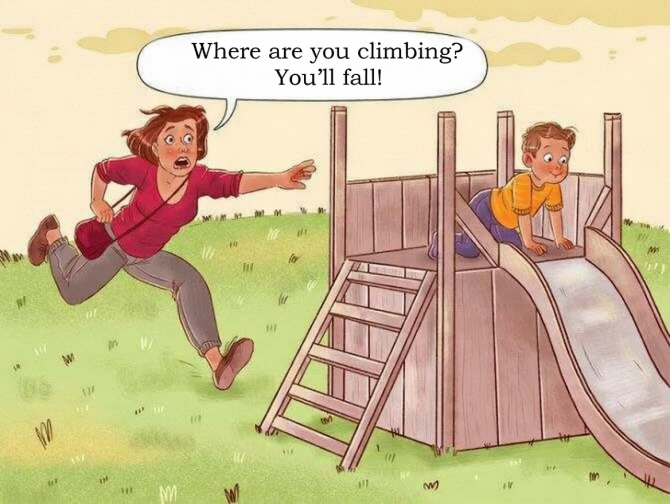
Don`t try to protect the child from all mistakes. By giving them the opportunity to show independence and initiative appropriate for their age, you make them more confident. Let them choose their own clothes to wear, tie their shoelaces, or climb down from a high slide. Get them used to doing chores at home and choosing extracurricular activities themselves.
It`s useful to introduce some rules, for example, ”play computer games after homework”, ”wash in the mornings”. This makes children confident. They can solve some tasks without your help, which means they will learn to be independent.
If some action can be truly dangerous for the child, strictly forbid it and adhere to it without exceptions. Children who don`t know boundaries are more anxious than their peers.
6. Loving but not respecting
Love alone is not enough to form healthy self-esteem. You should treat the child as an equal, listen carefully and not interrupt. Then they will expect and demand the same from other people. Nothing upsets children like adults not taking them seriously, not sharing their feelings, or turning to other things when talking to children. In this case, the child feels invisible.
Try not only to accept their emotions (positive and negative) but also to name them. If your son cries over a lost toy, avoid the phrase ”Nothing terrible”, but say: ”I understand you`re upset that your favorite transformer is lost.”
7. Saying humiliating phrases about yourself and showing your insecurity
The child is a mirror of the parents. Therefore, when you constantly apologize for inconveniences and show your insignificance, the child adopts your behavior. You want your son or daughter to be more confident and secure in life - start with yourself. Treat yourself with respect.
8. Threatening and behaving illogically
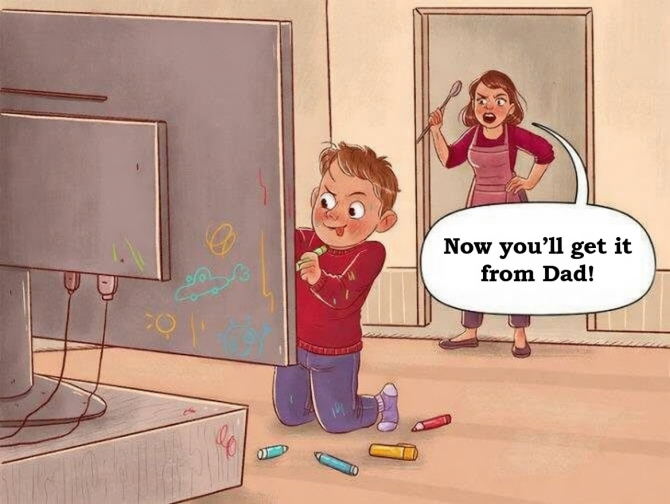
”We`ll go home, and dad will punish you!” Often it`s not parents, but grandmothers or grandfathers. They no longer allow, but then don`t know how to deal with an active child. But if you often threaten children with punishment and later don`t punish, they stop taking threats seriously. But if punishment does reach them, children feel nothing but resentment.
If the offense is not that big, why intimidate the child at all? If the offense is serious, don`t postpone the punishment. By throwing empty promises, you only reinforce distrust of your words in your children or fear, and undermine the child`s confidence.
Avoid the habit of frequently changing plans without a visible reason or scolding the child in an emotional outburst. Such inconsistency creates a sense of fragility and instability in the world. Already in adulthood, a person raised on such principles will think it`s better not to come out of their shell, because initiative, as experience tells them, is punishable.
Do you have your own parenting methods to instill confidence and leadership qualities in children? How do you punish your child for mischief? Share your life experience in the comments.
Liked what you saw? Recommend to friends
Next post