-
- 8 x
-
https://torno.lv/x8ZEgqx
It has been determined that there are more than 4 million insect species on Earth, and few have managed to avoid their bites.
In summer, when many go on vacations outside the city, the risk of being bitten increases. Fortunately, in our latitudes, there are only a few insects whose bite poses a deadly threat to humans, but even the most common mosquito or ant can cause many troubles.
Continuation of the article
To help avoid unpleasant consequences, we will teach you to recognize common insect bites and provide the necessary first aid.
Help in cases of insect bites
1. Ticks
In summer, the activity of blood-sucking ticks increases - small arachnids of the spider class that are carriers of life-threatening diseases, including tick-borne encephalitis and tick-borne borreliosis (Lyme disease).
The parasite`s mouth is designed to allow it to attach to the skin almost painlessly. In this case, the person will not feel pain and may only notice the tick on their body after a few days.
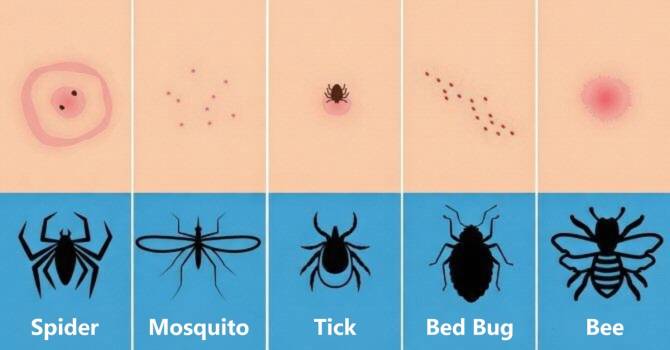
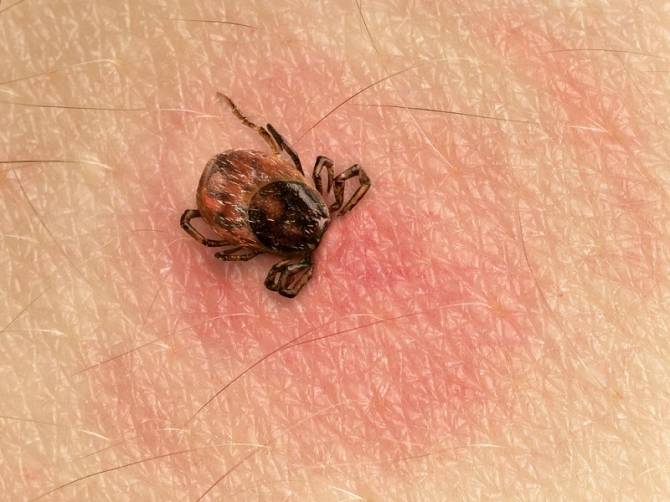
It may happen that the tick has bitten and fallen off. Then there will be a red spot several centimeters in size at the bite site, with a black or red dot in the center.
In any case, you should see a doctor urgently. If there is no possibility to get to the hospital, you can remove the tick yourself.
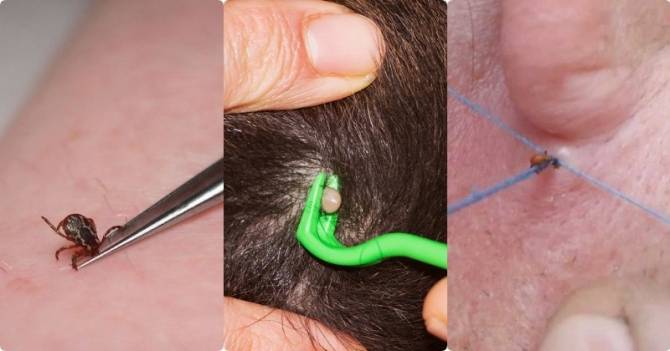
We have already told you earlier how to remove a tick with tweezers, a syringe, a special extractor, a cotton swab, thread, or even a bank card. All these methods have their advantages and disadvantages.
A tick can be a source of quite a few diseases, so when removing the tick, save it for testing for infections (tick-borne encephalitis, Lyme disease). This can usually be done at an infectious disease hospital or laboratory.
2. Mosquitoes
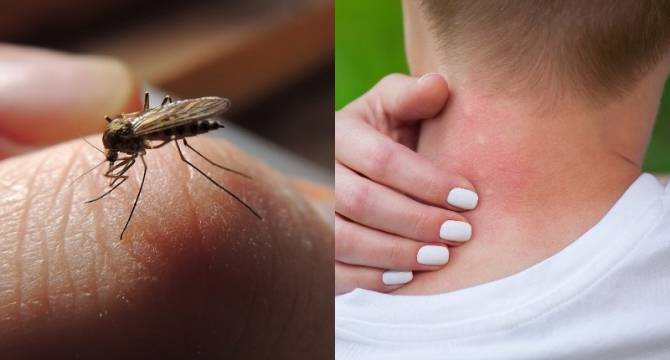
Mosquito bites look like swollen red spots the size of a pea and itch a lot. No special measures are needed, but that`s not always the case.
Some people react to mosquito bites with fairly serious allergic manifestations, which appear as severe swelling at the bite sites.
Even if there is no allergic reaction to mosquito bites, blisters and itching still appear. Therefore, to reduce the swelling, it is recommended to apply something cold and then smear the blisters with any soothing ointment.
Menovazin will help quickly remove swelling and inflammation at the bite site. This very cheap remedy is not inferior to advertised imported gels.
3. Bees
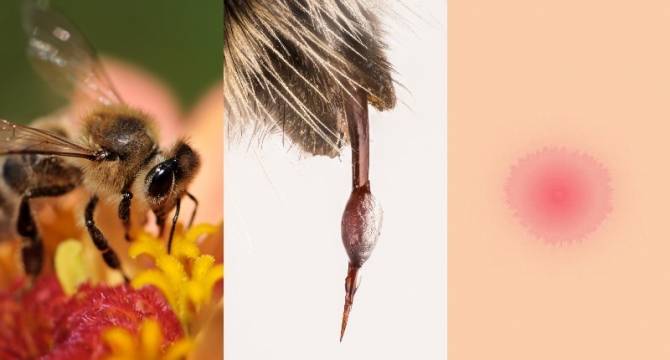
When stinging, a bee dies. This happens because along with the stinger, it leaves its intestinal tract. Therefore, recognizing a bee sting is simple.
Usually, the skin around the stinger turns red, swelling occurs. The person feels sharp pain and burning, and after some time, intense itching.
The stinger should be removed immediately to prevent the venom from entering the bloodstream. This should be done with sterile tweezers. It is important that no part remains under the skin, as inflammation cannot be avoided then.
Swelling can be removed by treating the bite with alcohol, vinegar, soda solution, or other home remedies; use any anti-allergic agent.
For people allergic to bee venom, a sting can become a real threat to life. If allergy symptoms develop quickly, threatening life, the bee stung in the face, more than three bees stung, use an epinephrine injector and call emergency medical help.
4. Wasps
Summer is the time for ripe fruits and berries. However, when enjoying them, you need to be careful not to bite into a wasp or bee.
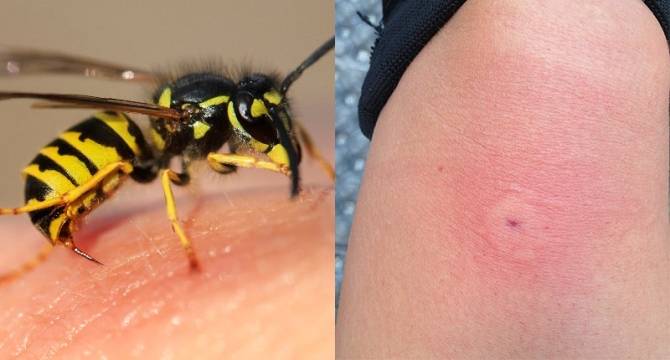
Symptoms after a wasp attack are similar to those after a bee sting. At the bite site, there is a burning sensation, the skin swells and turns red. Sometimes headaches, high fever, and rashes on the body occur.
A wasp can sting a person multiple times. As with bees, it is important not to have an allergy to the insect`s sting, otherwise anaphylactic shock may occur.
5. Hornets
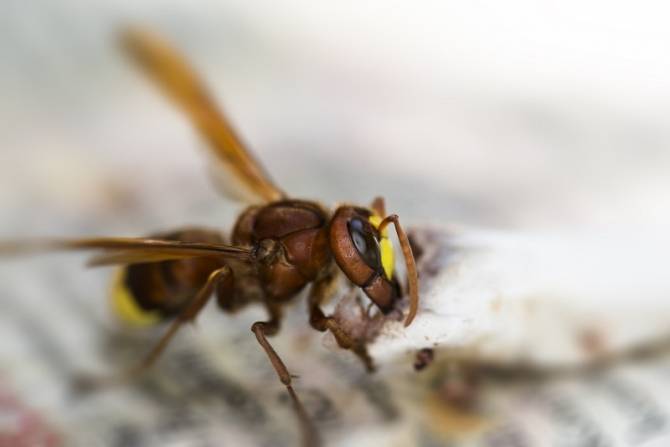
At the site of a hornet sting, redness and severe tissue swelling occur, blisters may form. Since hornets are larger than their relatives, their venom is more toxic. At the sting site, there is a burning pain, even sharper than after a wasp sting.
If after a hornet sting a person feels cold in the extremities, their ears and lips turn blue, it becomes difficult to breathe, they should urgently see a doctor.
6. Horseflies
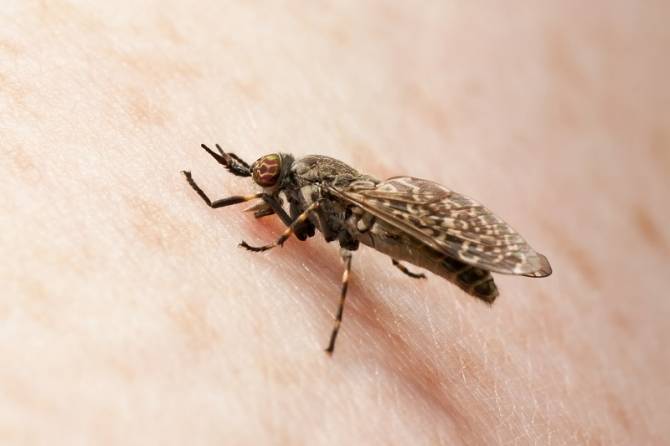
Horseflies carry various diseases, such as tularemia and anthrax, but more often attack livestock than humans. A horsefly bite leaves a noticeable mark with swelling around it, there is a burning sensation followed by itching, dizziness, infection is not excluded.
To limit the effect of horsefly saliva, press the bitten area with a finger. Apply ice, rinse the bite with cold water, smear with alcohol or hydrogen peroxide. After that, you can apply iodine or brilliant green.
7. Fleas
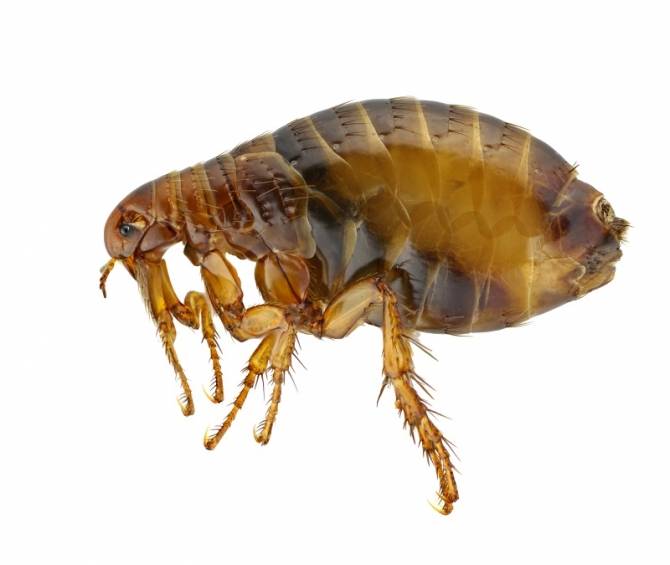
Fleas are wingless blood-sucking insects that live on domestic and wild animals. Unlike bedbugs and ticks, these parasites do not inject painkillers into the victim`s blood, so immediately after a flea bite, there is intense pain resembling a needle prick.
Small reddish spots remain on the skin with a very small hole in the center and a dark red circle around it. The most common locations are on the neck, waist, ankles, legs, elbows, and knees.
The spots itch intensely and often bleed, resulting in a blood crust. A characteristic sign of flea bites is a large number of them in one place on the skin.
In addition to unpleasant sensations, flea bites are dangerous because they carry anthrax, brucellosis, tularemia, and other diseases. The parasite`s saliva can cause both acute and chronic allergic reactions.
The affected area should be washed with soapy water, wiped, then apply an antiseptic. To remove swelling, wipe the wounds with vinegar diluted with water in a 1:1 ratio or citric acid solution.
8. Ants
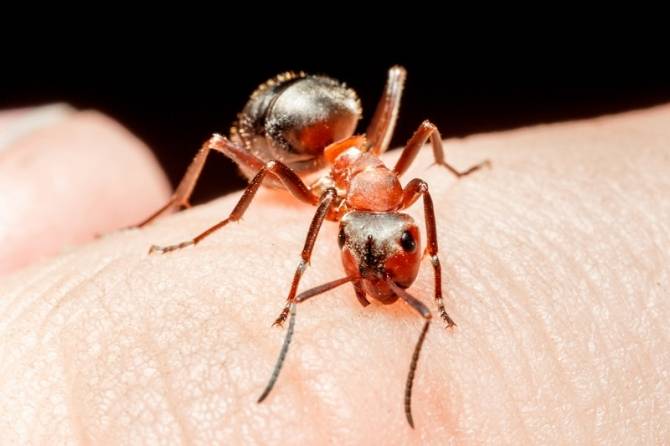
Most ants do not pose a threat to humans. A red forest ant bite looks like a mosquito bite. A pink spot appears on the skin, which then itches. At the moment of the bite, there is a burning sensation, as if boiling water has gotten on the skin.
9. Bedbugs
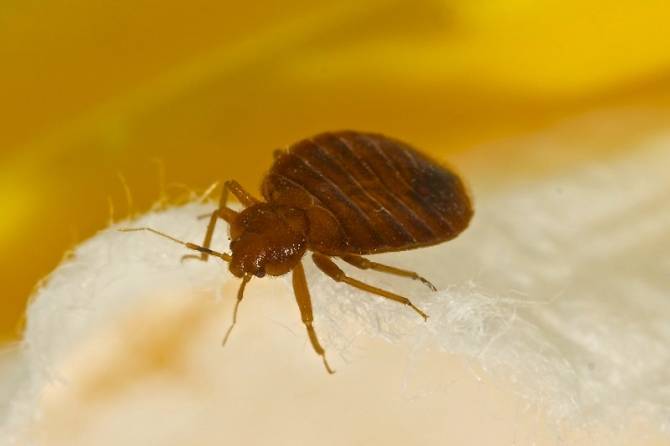
Bedbugs need just a moment to pierce human skin with a special elongated proboscis resembling a beak. Bedbug bites do not always cause pain to humans and can remain unnoticed for a long time.
Bedbugs choose the most vulnerable and exposed places on the human body, such as legs, arms, or neck. At first glance, bedbug bites resemble flea attack marks, but the distinguishing feature is the characteristic chains of bites on the skin.
A normal bedbug bite passes in about ten hours, but if an allergic reaction occurs, healing can take two or three days. At the bite site, a blister usually appears, which bursts and then completely disappears.
Irritation at the injury site can be removed, for example, with Fenistil gel. Before applying cream or ointment, it is recommended to disinfect the inflammation with a cotton pad moistened with medical alcohol.
10. Spiders
Poisonous spiders are not uncommon in Russia. Their bite can end with quite significant troubles, even in a hospital bed.
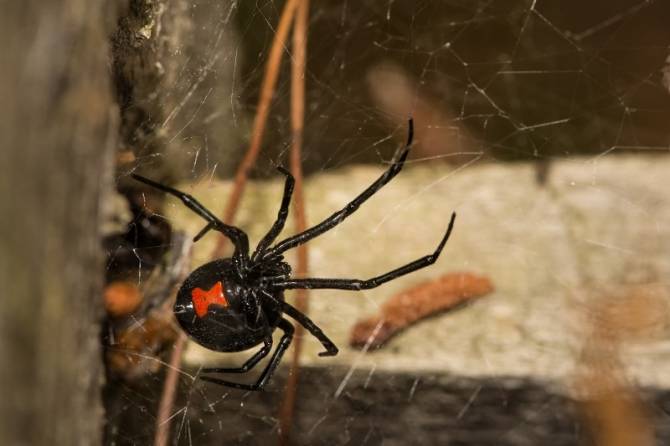
However, only female karakurt spiders pose a deadly danger. It is quite difficult to confuse them with other spiders: bright red spots or dots stand out on the upper side of the black abdomen, and on the underside - a spot in the shape of an hourglass.
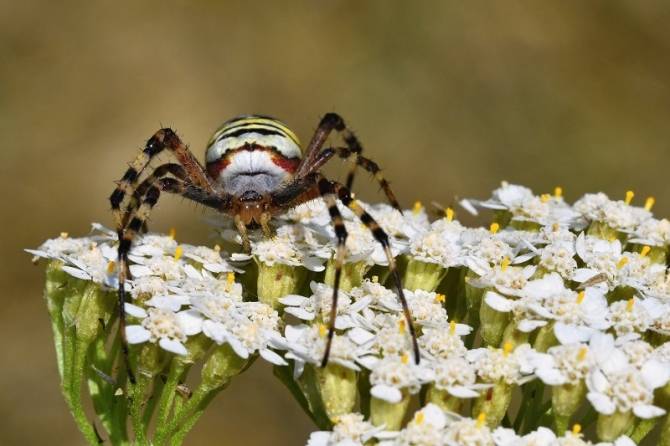
The bite of the South Russian tarantula, phalangium, false black widow, and Brunnich`s argiope can cause a lot of pain.
When spiders bite adults or children, severe body intoxication develops, so you need to quickly provide first aid to the victim. Call emergency medical help and only then try to alleviate the victim`s condition.
The following activities will help prevent the spread of venom in the body: wash the bite site with cold water, treat with hydrogen peroxide, iodine, ethyl alcohol, bandage the arm or leg above the bite with an elastic bandage.
Most repellent ingredients are toxic substances that are undesirable for pregnant women and children. To avoid applying store-bought chemicals to the skin, use natural mosquito repellents to not harm health and protect yourself and your loved ones from annoying insects.
In case of a tick bite, you need to act immediately, because the faster you remove the attached parasite, the lower the risk of contracting borreliosis.
Liked what you saw? Recommend to friends
Next post