-
- 10 x
-
https://torno.lv/xP03vsn
Fitness experts are convinced that you can get in good shape without going to the gym. Suitable exercises for this are ones done at home: plank, twists, squats. But they only seem simple at first glance; in reality, many people do them incorrectly. And this can not only affect effectiveness but also cause health problems.
We learned about common mistakes in basic exercises, studied specialist recommendations, and now we know how to avoid them.
Continuation of the article
1. Plank
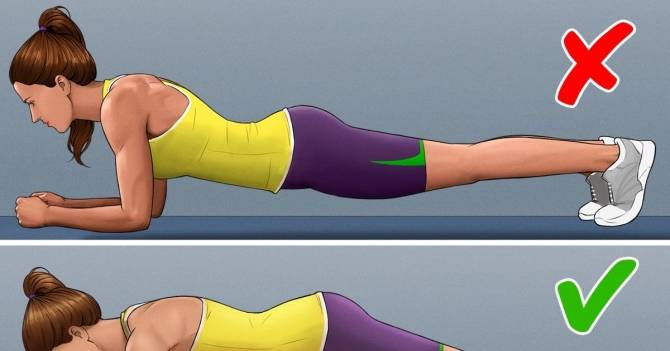
The plank is one of the most effective basic exercises that engages all parts of the body. But incorrect execution cancels out all the effectiveness and can lead to spinal problems.
Mistakes
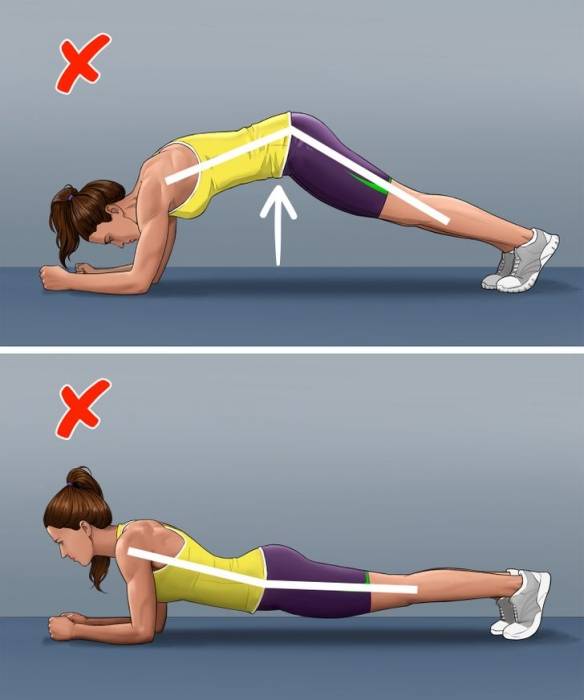
• Raising the pelvis leads to improper load distribution, resulting in excessive tension in the shoulder area, which can cause neck pain.
• Arching the lower back reduces the load on the abs, harms the knees, and can cause pain in the lumbar region.
• Incorrect head position: looking up or to the sides can lead to cervical osteochondrosis.
Correct technique
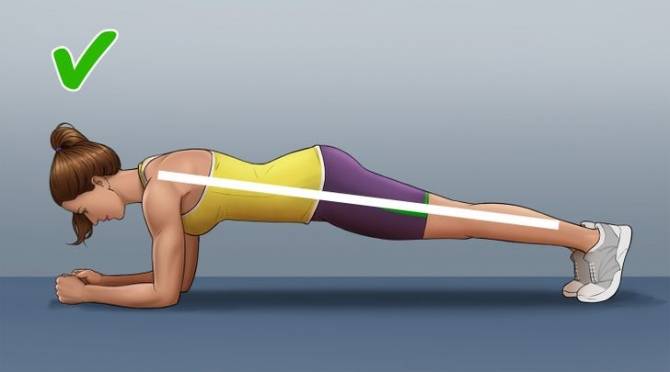
• Place your elbows directly under your shoulders, relax your neck, look down.
• Legs should be straight, but glute muscles tensed.
• Back should be straight, pull in your stomach, and hips should form a straight line with shoulders and heels.
2. Reverse push-ups
A basic exercise for developing the triceps and upper body, which is great for beginners because it`s easy to perform. Usually done from a bench or stool, but with certain agility, you can push off from the floor.
Mistakes
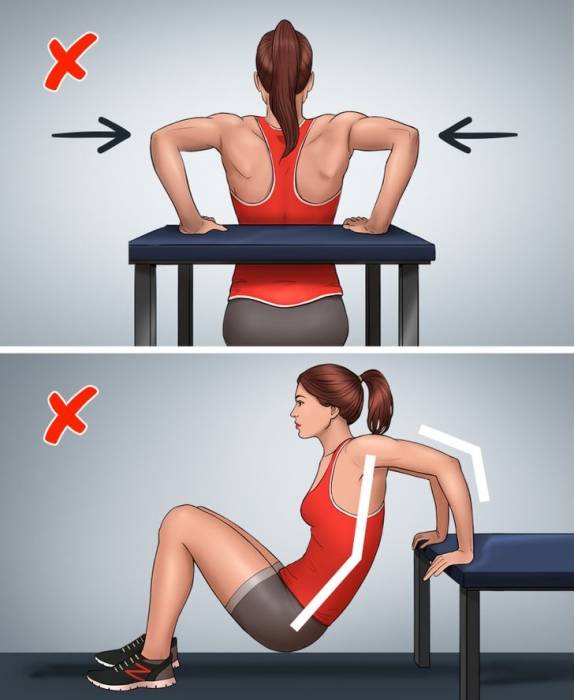
• If you flare your elbows out to the sides, the shoulder joints will be loaded instead of the triceps.
• Rounding the back also overloads the shoulders and can lead to injury.
Correct technique
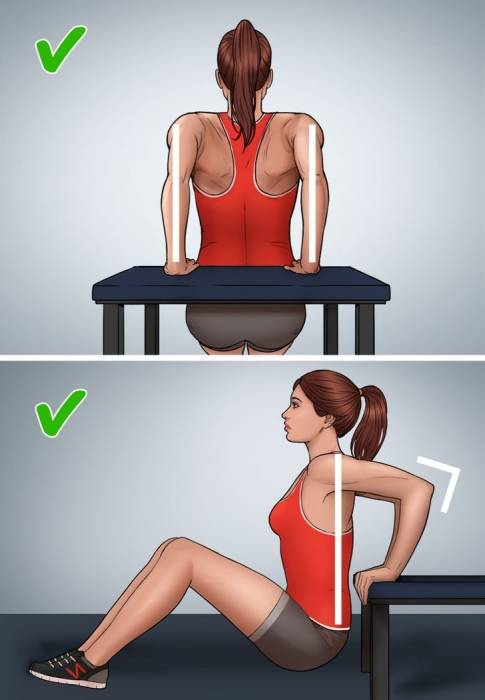
• Place your palms on the edge of a stable chair at shoulder width, position your hips evenly and extend your legs forward, resting your heels on the floor.
• Slowly lower your body using arm strength. At the end, elbows should be at 90 degrees. Then push off from the bench and return to the starting position.
• Back straight and positioned as close as possible to the chair, elbows bent back not to the sides.
3. Crunches
To perform proper crunches, lie on the floor and bend your knees at a right angle. Then, using your ab muscles, smoothly lift your shoulders off the floor. It seems like nothing could be simpler, but many make several mistakes.
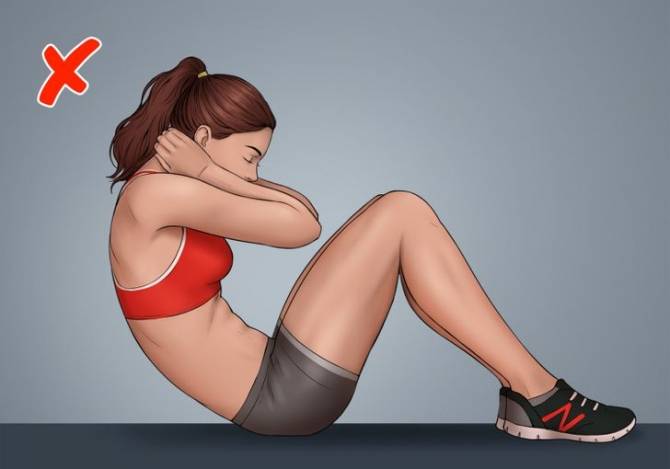
• Large range of motion. If you lift your torso too high, the main load will be on the hip muscles, not the abs.
• Arched neck. In this case, part of the load is transferred to the neck or arms if they are placed behind the head and pressing on the nape.
• Anchoring the feet reduces pressure on the abs because the thigh muscles get involved.
Correct technique
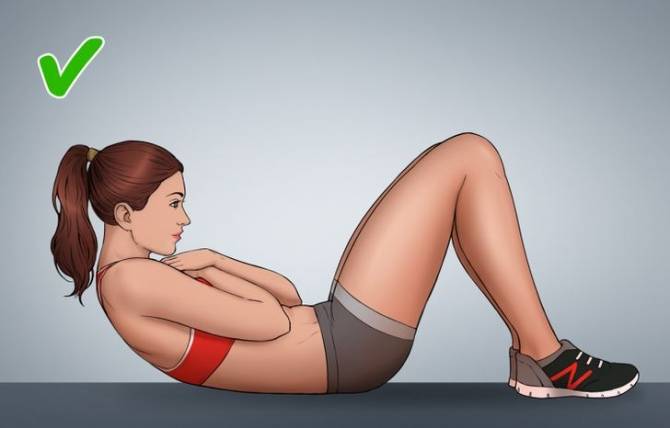
• Bend your knees at a right angle, press your lower back to the floor. Arms can be crossed on the chest or placed behind the head.
• Using your ab muscles, smoothly lift your shoulders off the floor by 15–20 cm and then slowly lower yourself without relaxing.
• Throughout the exercise, feet are firmly pressed to the floor, and gaze is directed forward.
4. Push-ups (modified)
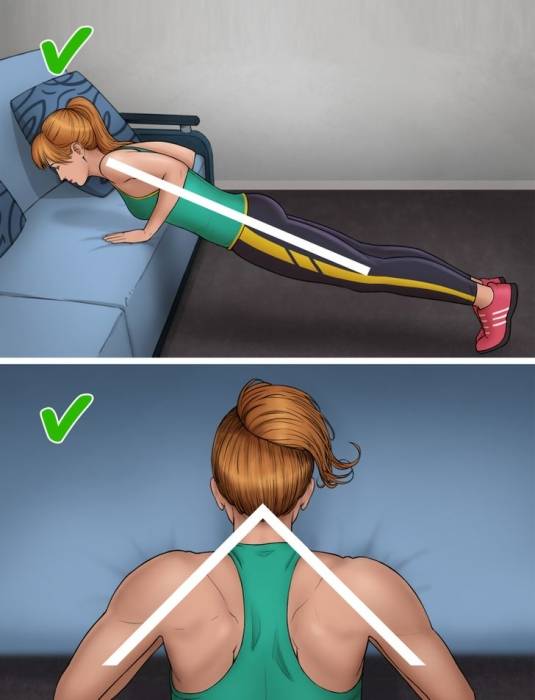
Studies show that the easy push-up version uses the same target muscles but without extra load. It can be push-ups from knees or toes, but from a wall, bench, sofa.
Mistakes
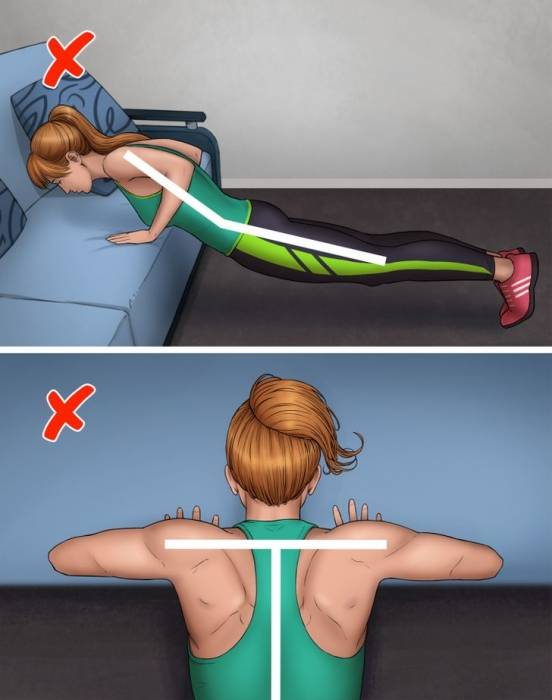
• Arching the lower back will create load on the spine.
• Elbows are positioned to the sides and from above resemble the letter “T”. In this position, shoulders are overly tensed, but triceps and chest work less.
Correct technique
• Place your hands on the floor, sofa, or wall. Straighten your body like a string and lower it as low as possible. Then smoothly rise.
• Place hands slightly wider than shoulder width. Point fingers forward.
• Ideally, elbows are at about 45 degrees to the torso.
5. Squats
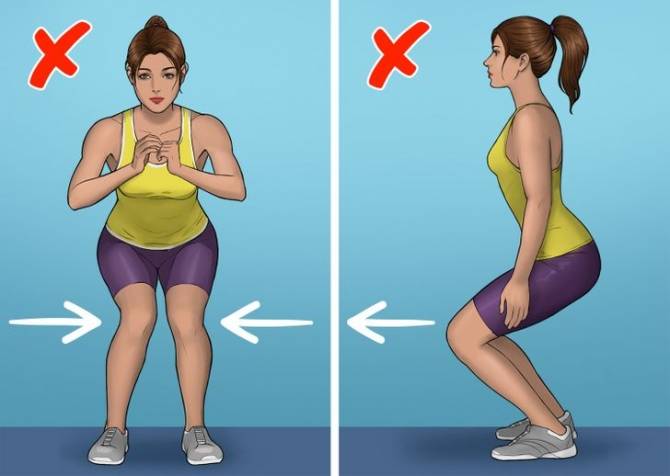
Everyone knows that during squats you shouldn`t lift your feet off the floor or arch your back, but there are less obvious mistakes.
• Knees don`t bend toward the toes, which increases load on the joints and less affects the hamstring muscles.
• Knees lean forward beyond the toe line. This reduces glute load and can cause pain.
• Some tilt their head during squats. You shouldn`t do that: it disrupts balance and technique, and can also cause lower back and neck pain.
Correct technique
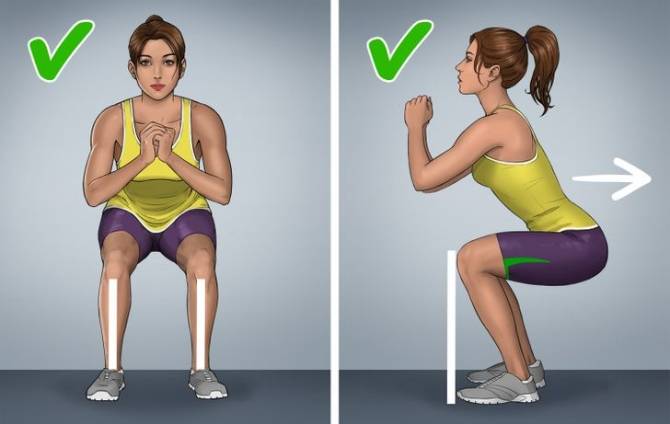
• Back is straight, gaze straight ahead, feet pressed to the floor throughout the exercise.
• Knees shouldn`t extend beyond the toe line. To improve your technique, think of lowering your glutes rather than bending your legs.
• Knees should point in the same direction as the toes.
• Squats are performed smoothly, without jerks.
A lot also depends on the squat depth and leg width.
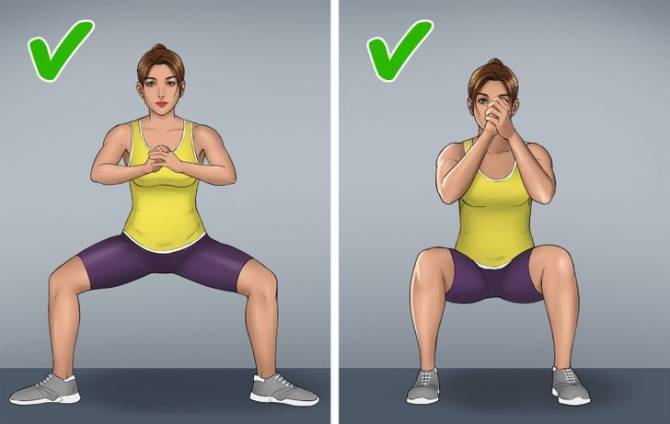
• Squat correctly until hips are parallel to the floor. With partial squats, thigh muscles are poorly trained, but with too deep squats, knees are overloaded.
• The wider the legs are placed, the more the inner thigh and glute muscles are loaded.
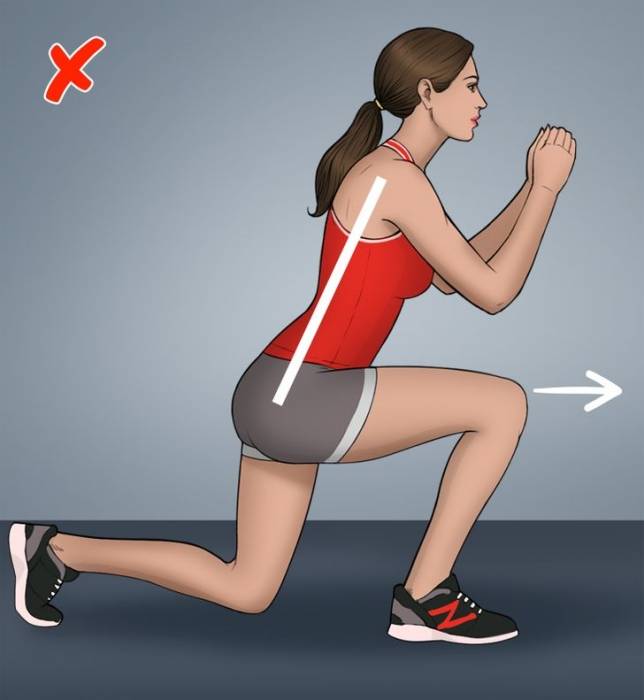
6. Lunges
When performed correctly, lunges load the glute muscles and front thigh surface no worse than squats and deadlifts.
Mistakes
• The front leg`s knee extends beyond the toe line. This leads to uneven load distribution and goes to the front thigh surface, disengaging the glutes from work.
• The body falls forward, which unnecessarily loads the supporting leg`s knee and creates imbalance.
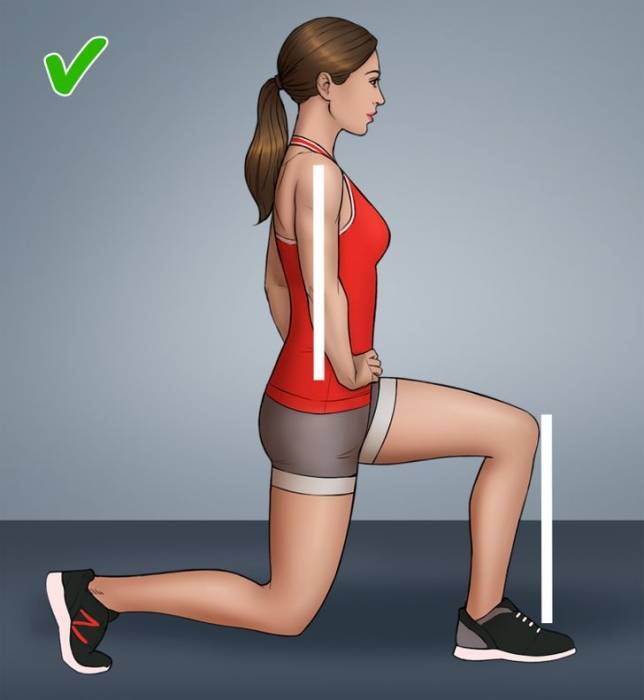
Correct technique
• Take a big step forward, transferring body weight to the front leg. Keep the torso straight.
• Lower down until the supporting leg`s thigh is parallel to the floor. Both legs should form a 90-degree angle between thigh and shin.
• It`s important that the knee doesn`t exceed the imaginary toe line.
• Return to starting position by pushing off with the supporting leg`s heel from the floor.
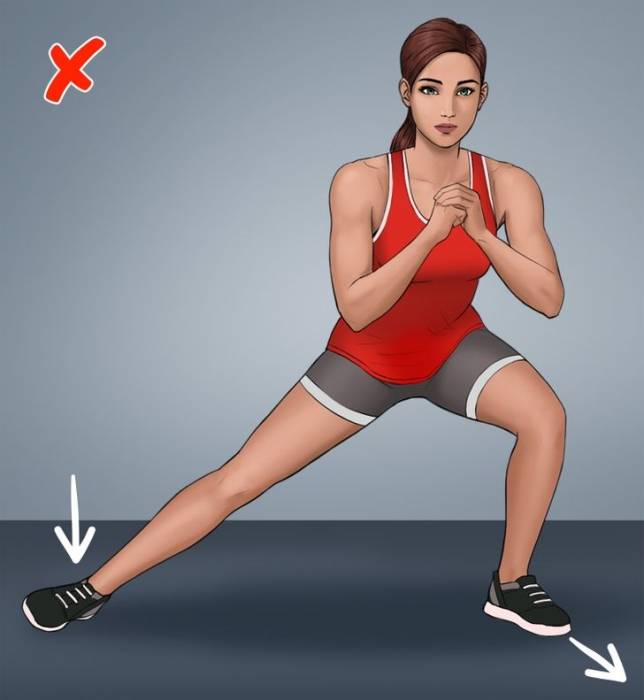
7. Side lunges
The exercise excellently engages the inner thigh muscles. It`s quite simple, but incorrect execution can adversely affect the spine and knees, as well as reduce effectiveness.
Mistakes
• The extended leg`s foot is lifted off the floor, and the supporting leg`s toes are pointed outward.
• The supporting leg`s knee deviates to the side.
• Back leans forward.
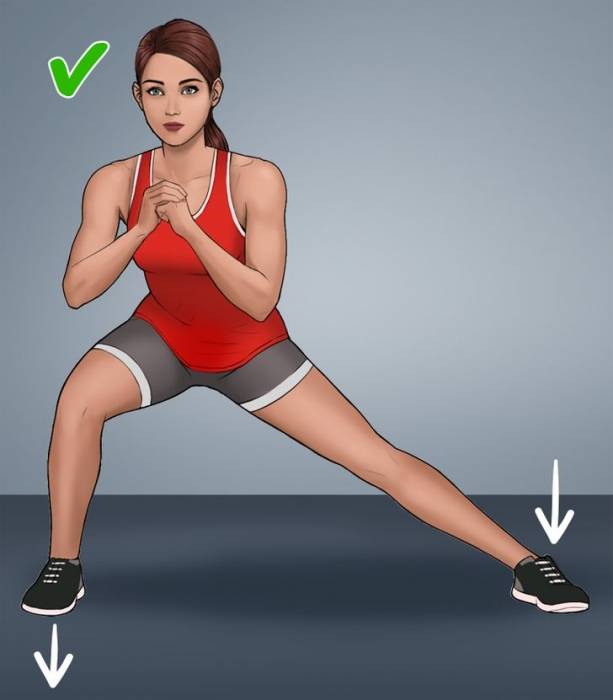
Correct technique
• Take a step to the side and shift the pelvis back so that the supporting leg`s thigh is almost parallel to the floor.
• Both feet fully touch the floor and are pointed forward with toes; back is straight.
• The supporting leg`s knee is above the foot and the shin is perpendicular to the floor.
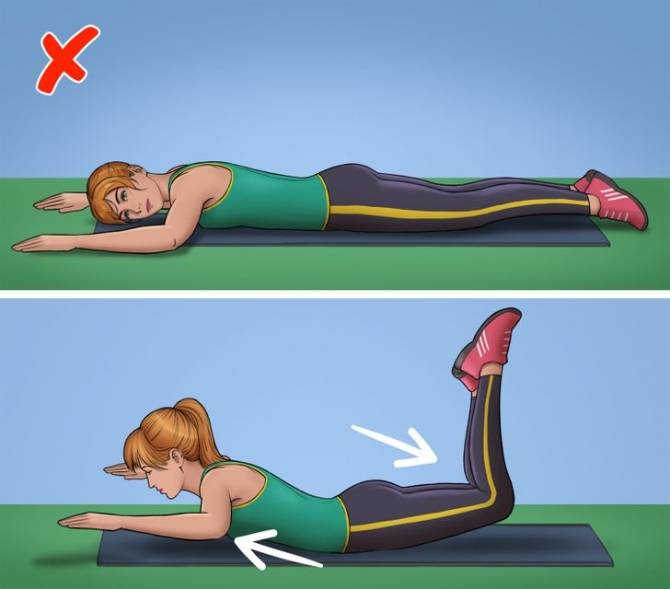
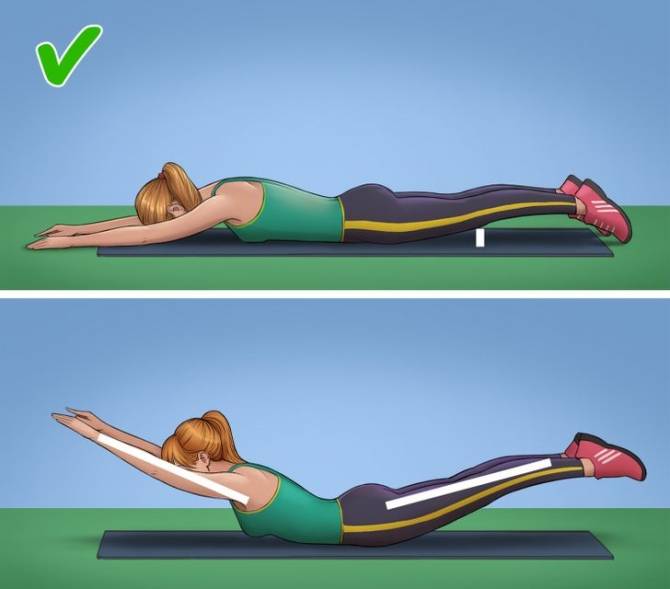
8. “Boat”
Regular performance of the “boat” is an ideal way to strengthen the lower back, improve blood circulation in the pelvic organs, and reduce back pain.
Mistakes
• Knees in the initial position are pressed to the floor, so leg muscles are loaded instead of the back.
• During the exercise, limbs are bent - thus reducing the load on the back muscles.
Correct technique
• Starting position: lie face down, extend arms and legs as much as possible. Tense hips so that knees don`t touch the floor.
• Lift arms, chest, and legs off the floor. Slowly raise them up, holding for 2–4 seconds.
How often do you exercise at home? And what exercises do you include in your workouts?
Liked what you saw? Recommend to friends
Next post