
Advertisement
The forgotten and neglected 2000-year-old Roman Colosseum has many secrets, and there are many interesting facts associated with it.
Source: infoniac.ru
15 Interesting Facts About the Roman Colosseum
12.03.2016
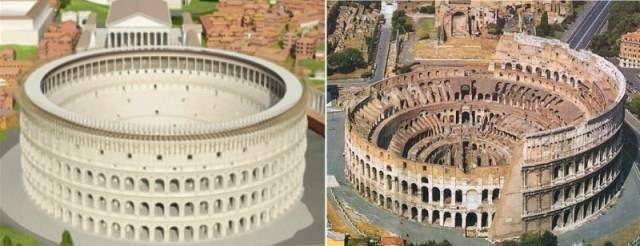 Photo: infoniac.ru Advertisement
The forgotten and neglected 2000-year-old Roman Colosseum has many secrets, and there are many interesting facts associated with it.
Source: infoniac.ru Continuation of the article 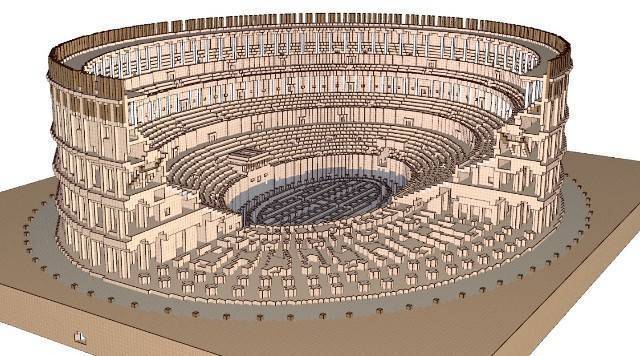 Photo: infoniac.ru 1. Its real name is the Flavian Amphitheatre The construction of the Colosseum was started in 72 AD by order of Emperor Vespasian. In 80 AD, during the time of Emperor Titus (Vespasian`s son), the construction was completed. Together with Titus, from 81 to 96, the country was ruled by Domitian (Titus`s brother). All three were from the Flavian dynasty, and in Latin, the Colosseum was called Amphitheatrum Flavium. 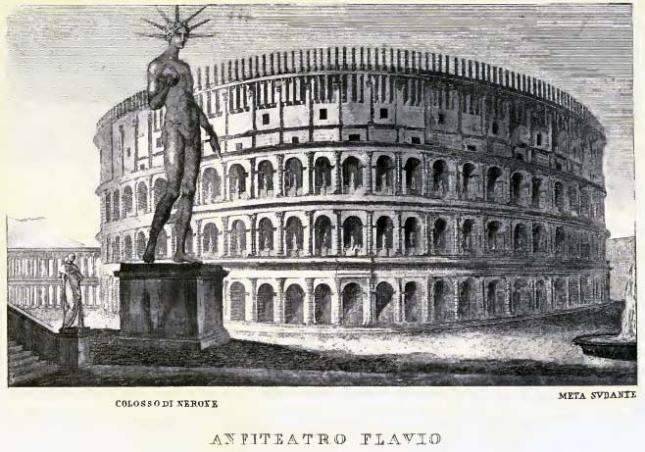 Photo: infoniac.ru 2. There was a time when a gigantic statue of Nero - the Colossus of Nero - stood next to the Colosseum. The infamous Emperor Nero built a gigantic bronze statue for himself that was 35 meters tall. Initially, this statue was in the vestibule of Nero`s Golden House, but during Emperor Hadrian`s time, it was decided to place the statue closer to the amphitheatre. Some believe that the Colosseum was renamed in honor of the Colossus of Nero. 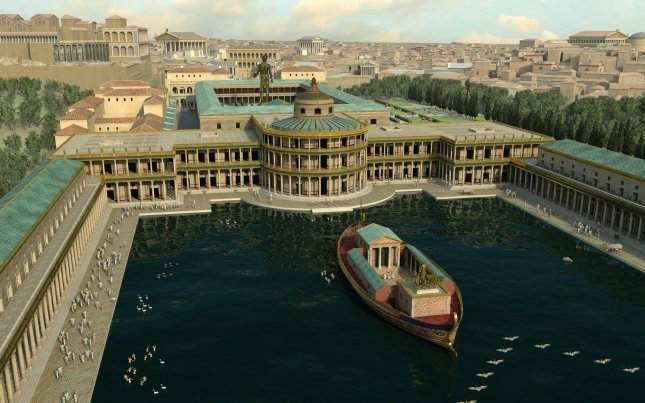 Photo: infoniac.ru 3. The Colosseum was built on the site of a drained lake Nero`s Golden House was built after the Great Fire in 64 AD, and its territory included an artificial lake. After Nero`s death in 68 AD and several civil wars, Vespasian became emperor in 69 AD. He nationalized Nero`s palace, then completely demolished it, and gave the land where the palace stood to the Roman people for use. All the expensive palace ornaments were removed and buried in the garbage, and later (104-109 AD) the Baths of Trajan were built in this place. The Romans used a complex underground irrigation system to drain the lake that was next to Nero`s house, then filled it in, and by the emperor`s order, began the construction of the amphitheatre, which was intended for the entertainment of the Roman people. 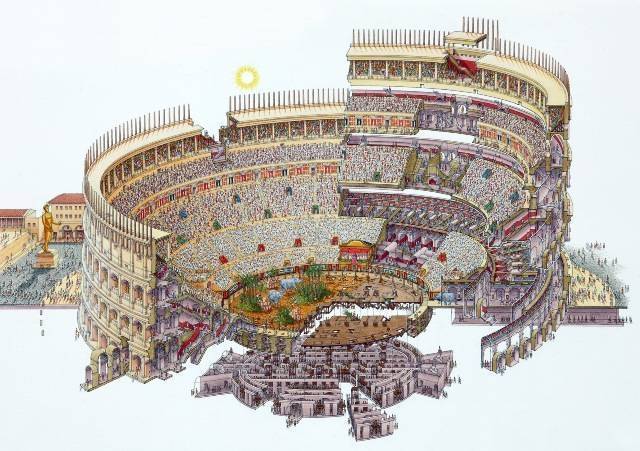 Photo: infoniac.ru 4. The Colosseum was built in 10 years After the siege of Jerusalem in 70 AD, Emperor Vespasian completely destroyed the Temple of Jerusalem, leaving only the ”Wailing Wall,” which still stands. After that, he started the construction of the Colosseum, using materials left from the Golden House. 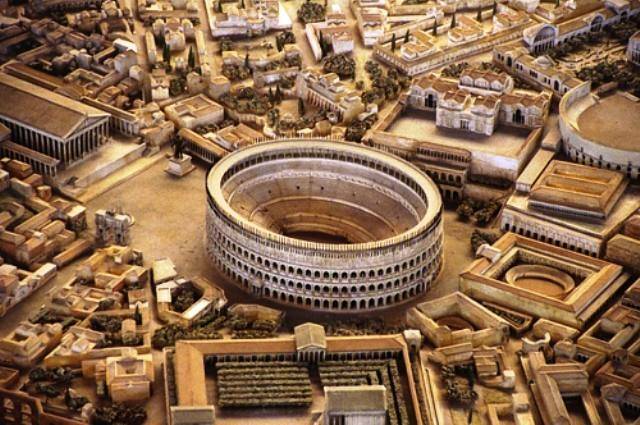 Photo: infoniac.ru 5. It is the largest ancient amphitheatre ever built The Colosseum can be called a ”double amphitheatre” (two semicircles connected in an oval shape). It is built of cement and stone. The outer ellipse of the Colosseum is 524 meters long, the major axis is 187.77 meters, and the minor axis is 155.64 meters. The Colosseum arena is 85.75 meters long and 53.62 meters wide, and the walls are 48-50 meters high. The most important thing about this building is that it is entirely built of monolithic concrete, unlike other buildings that were built from bricks and stone blocks. 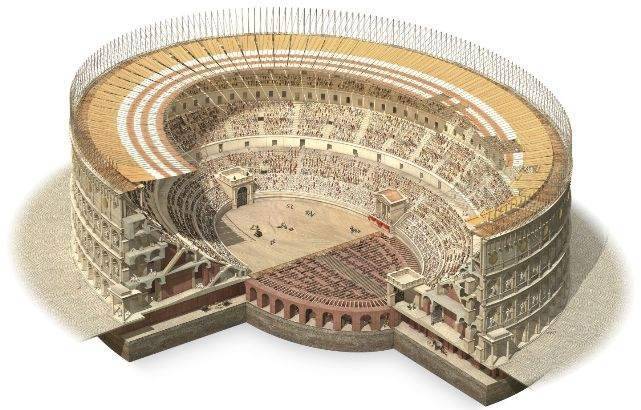 Photo: infoniac.ru 6. The Colosseum had five separate sections and boxes The building was designed to have space for both the poor and the rich. All spectators were divided into rows according to their social status and wealth. Senate members, for example, sat closer to the arena, while other residents sat in other rows with lower prices. In the very last - 5th row - sat the poor. All rows were numbered I-LXXVI (i.e., from 1 to 76). People of different statuses had separate entrances and stairs, and there were also walls that separated them. 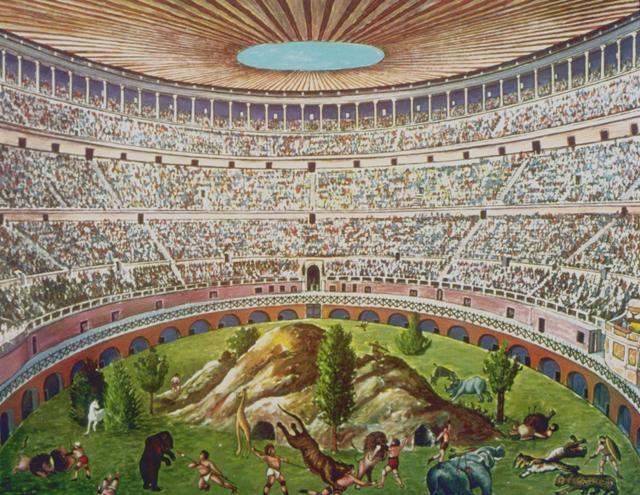 Photo: infoniac.ru 7. The Colosseum could hold 50,000 spectators Each person was allocated a seat only 35 cm wide. Nowadays, not all football stadiums can boast such attendance as the Colosseum had. 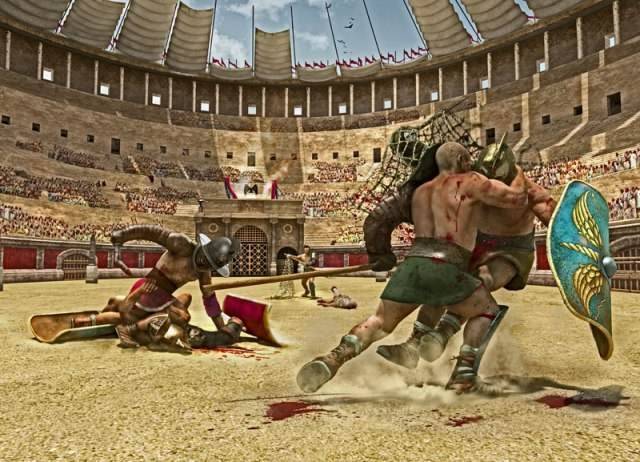 Photo: infoniac.ru 8. Gladiator fights were organized with incredible care For 400 years, volunteers, former soldiers, imprisoned soldiers, slaves, and criminals fought in the Colosseum arena, all for the entertainment of the Romans. But the fighters were not chosen randomly. To enter the Colosseum arena, gladiators competing were selected based on their weight, size, experience, fighting skills, and style. 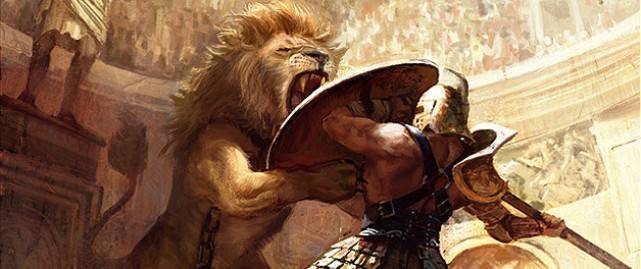 Photo: infoniac.ru 9. The Colosseum became a cemetery for many animals Besides gladiator fights, the Romans organized fights between animals as well as demonstrations. In the arena, one could see lions, elephants, tigers, bears, hippos, and other exotic animals that were killed or severely injured. Animal fights can still be seen today - it`s bullfighting (tauromachy - i.e., fighting with bulls). Animal fights were called ”morning games,” while gladiator fights were ”evening games.” Winners were awarded prizes in the form of medals (bone or metal), and statistics were kept - number of fights, wins, and losses. Of course, there were deaths, or gladiators received injuries that prevented them from continuing to perform. After a gladiator`s career, the former soldier received a pension. During the arena`s opening, about 90,000 animals died, and another 11,000 were killed during a 123-day festival organized by Emperor Trajan. According to estimates, during the Colosseum`s existence, about 400,000 people and more than 1 million animals died in its arena.  Photo: infoniac.ru 10. Grand naval battles Surprisingly, the Colosseum arena was specially flooded to about 1 meter high to hold naval battles. Reconstructions of warships were placed in the arena to celebrate great water battles. Water flowed directly into the arena through special aqueducts. All this could be seen until Emperor Domitian`s reign, when a basement was built in the Colosseum, containing rooms, passages, lifts, and animals.  Photo: infoniac.ru 11. The Colosseum was abandoned for many centuries When bloody gladiator fights ceased to be entertainment in the 5th century and the Roman Empire began to collapse, large public events were no longer held in the Colosseum. Moreover, earthquakes, lightning, and other natural phenomena significantly affected the condition of this building. Only in the 18th century did the Catholic Church and many priests decide that the Colosseum building should be preserved. Photo: infoniac.ru 12. The Colosseum was used as building materials The beautiful stone and marble from which the Colosseum was built attracted the attention of many people. After the 847 earthquake, Roman church leaders and aristocrats began to collect the wonderful marble that adorned the Colosseum facade and use it for building churches and houses. Similarly, travertine and rubble were used in the construction of various city buildings. It should be noted that the Colosseum was used as a source of building materials for structures such as Palazzo Venezia and the Lateran Basilica. Also, Colosseum marble was used in the construction of St. Peter`s Cathedral - it is the largest building in the Vatican and historically the largest Christian church in the world. 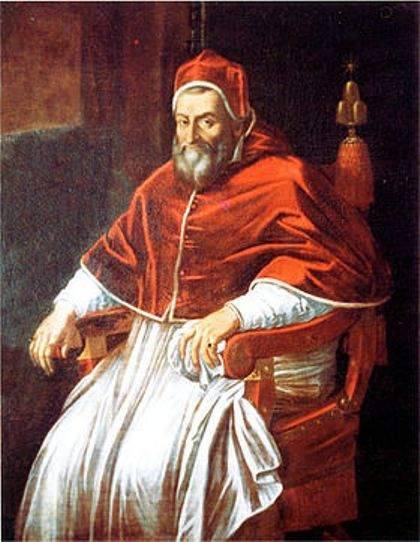 Photo: infoniac.ru 13. A priest wanted to turn the Colosseum into a textile factory The underground part of the Colosseum eventually filled with dirt, and for many centuries, Romans grew vegetables and stored them inside the building, while blacksmiths and merchants occupied the upper rows. Pope Sixtus V of Rome, who helped rebuild Rome in the 16th century, tried to convert the Colosseum into a textile factory, with living spaces in the upper rows and workplaces in the arena. But in 1590, he died, and the project was not implemented. 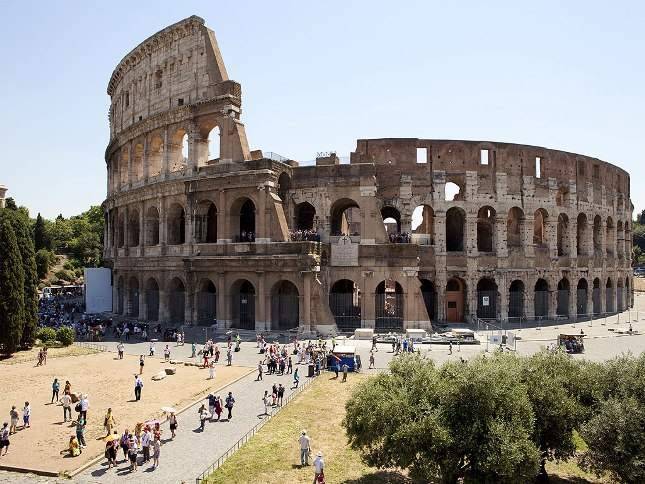 Photo: infoniac.ru 14. The Colosseum is the most visited site in Rome Similar to the Vatican with its holy places, the Colosseum is the second most popular historical monument in Rome. It is visited by about 6 million tourists each year. 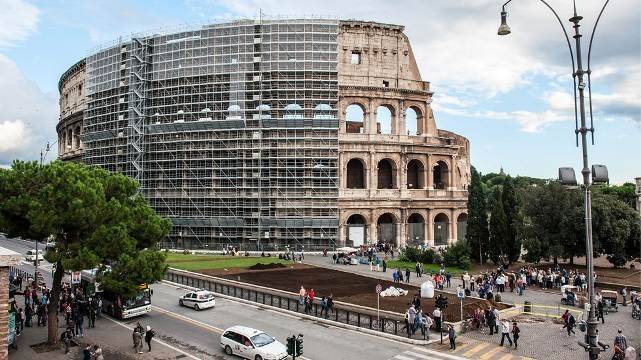 Photo: infoniac.ru 15. The Colosseum will finally be restored Initially, it is planned to spend 20 million euros to equip the arena. Billionaire Diego Della Valle plans to invest 33 million dollars to restore the Colosseum, and restoration work began in 2013: strengthening the arches, cleaning the marble, restoring the brick walls, replacing metal railings, as well as building a new tourist center and cafe. The Italian Ministry of Culture plans to restore the Colosseum as it was in the 19th century. In addition, they want to place a stage in the arena based on images of the Colosseum from the 1800s, which will cover the underground tunnels that are currently open to view. Liked what you saw? Recommend to friends Next post
Newest comments
|